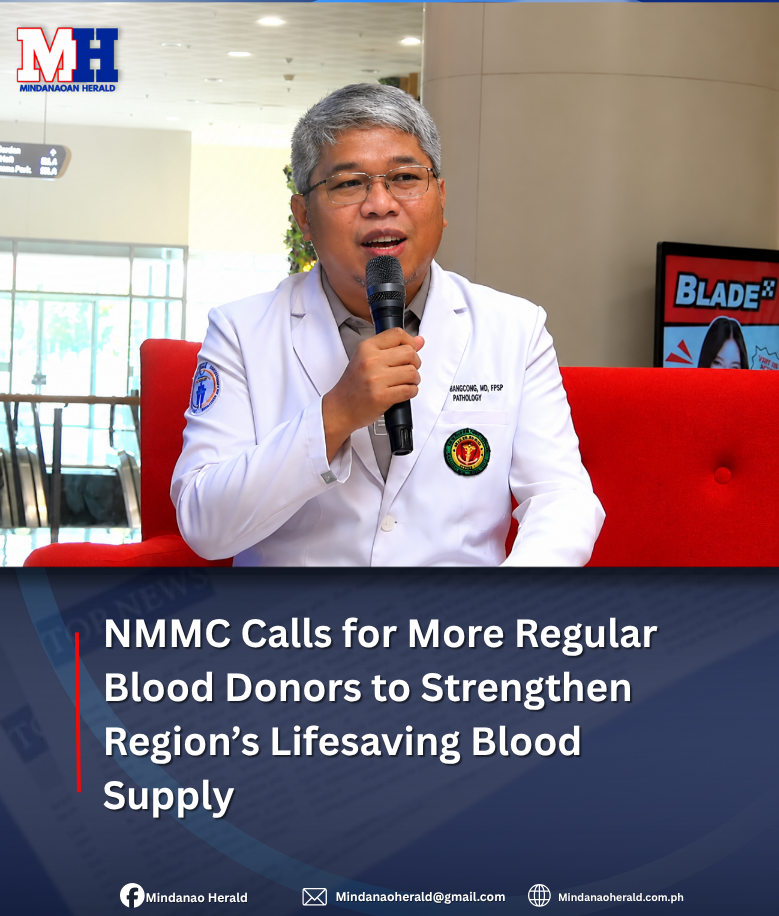
NMMC Calls for More Regular Blood Donors to Strengthen Region’s Lifesaving Blood SupplyCAGAYAN DE ORO CITY (PIA) — The Northern Mindanao Medical Center (NMMC) is encouraging more individuals to become regular voluntary blood donors as the demand for safe and sufficient blood continues to grow for emergency cases, surgeries, maternal care, and patients with serious medical conditions.NMMC Pathologist Dr. Ray Tomas S. Bangcong emphasized that voluntary blood donation remains the most reliable source of blood supply, helping hospitals provide immediate care to patients who need transfusions.According to Bangcong, the country requires around 6.8 million blood units annually to meet the needs of healthcare facilities.
He added that a single blood donation can potentially save up to three lives because donated blood is separated into components that can benefit different patients.Blood donations play a crucial role in treating individuals with cancer, blood disorders, severe anemia, traumatic injuries, dengue, pregnancy-related complications, and those undergoing major medical procedures.Bangcong said maintaining a stable blood supply relies heavily on regular volunteer donors, noting that only a portion of the population is eligible to donate blood.Individuals aged 18 to 60 years old who are in good health and meet medical requirements may donate.
Those aged 16 to 17 may participate with parental consent, while qualified adults aged 61 to 65 may donate with approval from their physicians.Before giving blood, potential donors undergo a screening process that includes a health questionnaire, physical assessment, blood pressure and pulse checks, and hemoglobin testing to ensure the safety of both donors and recipients.Addressing common concerns about blood donation, Bangcong assured the public that the process is safe and conducted by trained healthcare workers using sterile, single-use equipment.He advised donors to prepare by getting enough rest, drinking plenty of water, eating a proper meal, avoiding smoking before donation, and refraining from strenuous activities after the procedure.Bangcong also clarified that blood donation does not cause long-term weakness or anemia.
Eligible donors may safely donate every three months, giving the body enough time to restore the donated blood.To protect patients, all collected blood undergoes laboratory screening for HIV, hepatitis B, hepatitis C, malaria, and syphilis following health safety standards. However, Bangcong reminded donors that honest disclosure during screening remains essential since some infections may not immediately appear during the early stage.The NMMC Blood Bank continues to provide blood collection, donor screening, testing, blood component preparation, compatibility testing, and distribution services to hospitals and healthcare facilities across Northern Mindanao.
Bangcong encouraged schools, government offices, private organizations, and community groups to participate in blood donation campaigns and partner with NMMC’s Public Health Unit in organizing mobile blood donation activities.“Blood donation is one of the greatest acts of compassion. It is a simple gift that can extend another person’s life without expecting anything in return,” Bangcong said.Through stronger community participation, NMMC hopes to ensure a consistent and safe blood supply for patients across Northern Mindanao.(JAKA/PIA-10)

The Northern Mindanao Medical Center encourages the public to become regular voluntary blood donors to help maintain a safe and adequate blood supply for patients requiring emergency treatment, surgeries, and other lifesaving medical procedures. The hospital also partners with communities, schools, government agencies, and private organizations to conduct mobile blood donation drives across the region. (Photo: KPM/PIA-10)