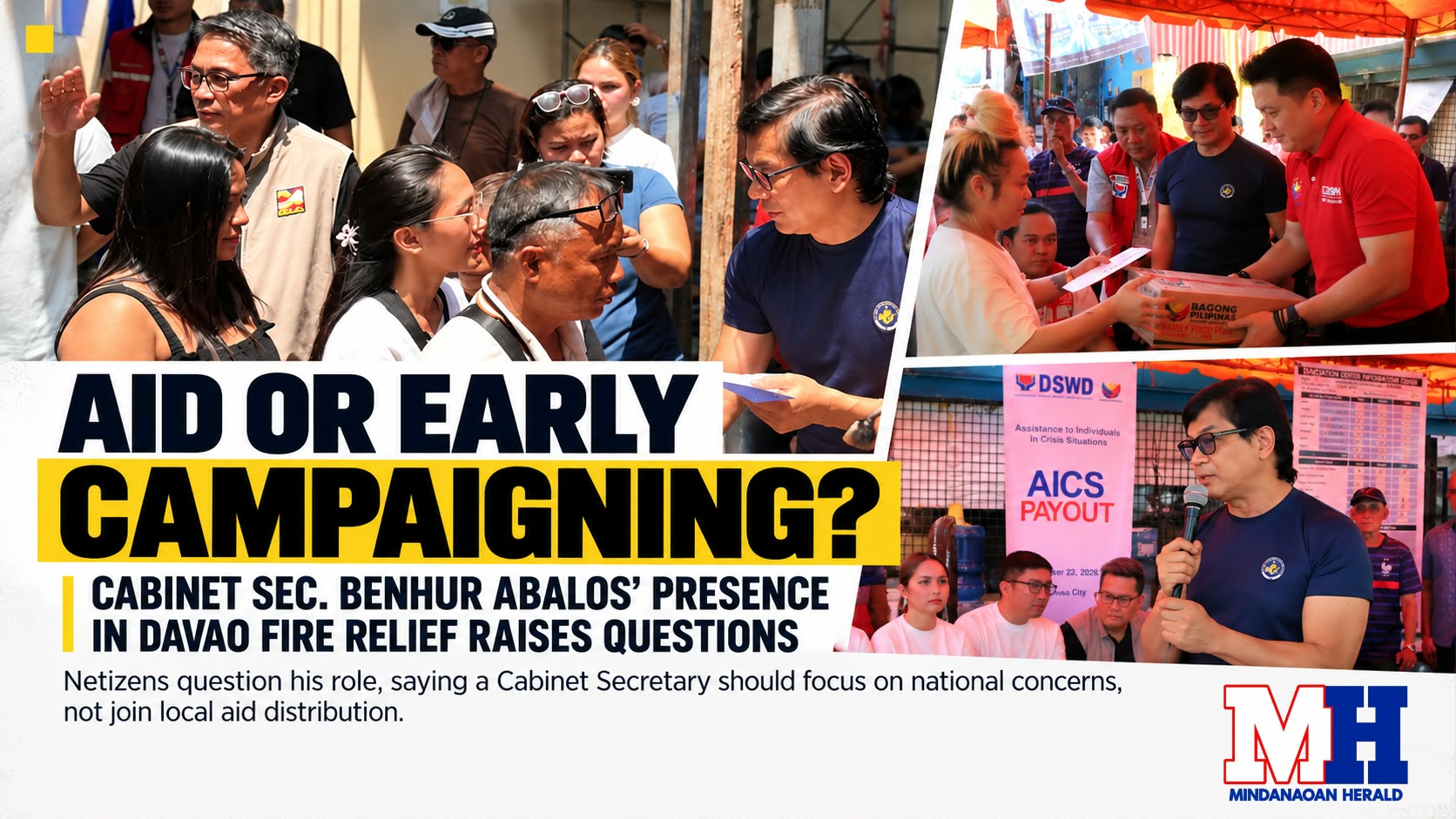
DAVAO CITY — As fire victims struggle to recover from the loss of their homes, Cabinet Secretary Benhur Abalos has come under scrutiny from some netizens over his presence at a government relief operation in Davao City, raising questions about the role of officials during disaster response.
Abalos attended the Department of Social Welfare and Development (DSWD) relief activity in Barangay 76-A Bucana and Barangay Leon Garcia in Agdao District on October 23. His appearance prompted questions online about his specific contribution to an operation led by the agency responsible for delivering social assistance.
For some critics, the issue goes beyond an official’s presence at a relief distribution.
They questioned whether his participation provided additional support to affected families or simply increased his public visibility while residents faced the difficult task of rebuilding their lives.
The discussion also revived questions about Abalos’ political future following his unsuccessful senatorial bid in the 2025 elections. Some netizens questioned whether his appearance could be perceived as early campaigning, although no evidence has established that the relief visit was intended for that purpose.
Meanwhile, DSWD Secretary Rex Gatchalian led the distribution of assistance, accompanied by Mindanao Development Authority Chairman and Secretary Leo Magno. More than 1,000 families were reportedly affected by separate fire incidents in Davao City in recent weeks.
The incident underscores a larger question about public service during times of crisis: What matters more—the presence of officials at relief operations or the measurable assistance they deliver to affected communities?
For families who have lost their homes and belongings, the immediate concerns remain clear: timely aid, sustained government support, and concrete measures to help them recover.
Public officials’ participation can be part of disaster response, but transparency about their roles and contributions is essential to maintaining public trust.